Skip to content

Healthy Foods for Fall

traditional chinese medicine foods for fall

The season of fall brings cooler weather and shorter days. As with any season, the world adjusts accordingly. Plants begin to go dormant, animals begin scrounging for food to store to get them through the upcoming winter months and humans start winterizing everything.

As fall descends on the land, it reminds us we need to start cutting back on the numerous cooling foods that are consumed during the summer months. Things like raw foods, salads, juices and fruits should be decreased because they can create too much cold in the body, according to traditional Chinese medicine. continue reading »

Posted in Acupuncture Research Sites | Comments Off on Healthy Foods for Fall

TCM and Cystic Fibrosis

Cystic fibrosis is an inherited disease that disrupts normal function of the epithelial cells in the body.  Epithelial cells line the passageways of many of our vital organs, including the lungs, liver, kidneys, reproductive system and the skin. Those who have cystic fibrosis have a defective gene that impairs epithelial cell function. This can lead to a buildup of sticky mucus throughout the body that may eventually lead to lung damage and chronic coughing, affecting how patients with cystic fibrosis breathe and filter air, digest their food and absorb the nutrients from that food. In the United States alone, there are nearly 12 million people who suffer from this disease. Unfortunately, there is no known cure and most of those affected with the disease only live into their 20s and 30s. Current modern medicine treatments focus on increasing the quality of life by managing symptoms. continue reading »

Posted in Acupuncture, Traditional Chinese Medicine | Tagged | Comments Off on TCM and Cystic Fibrosis

Auricular Acupuncture: What it is and why is everyone talking about it?


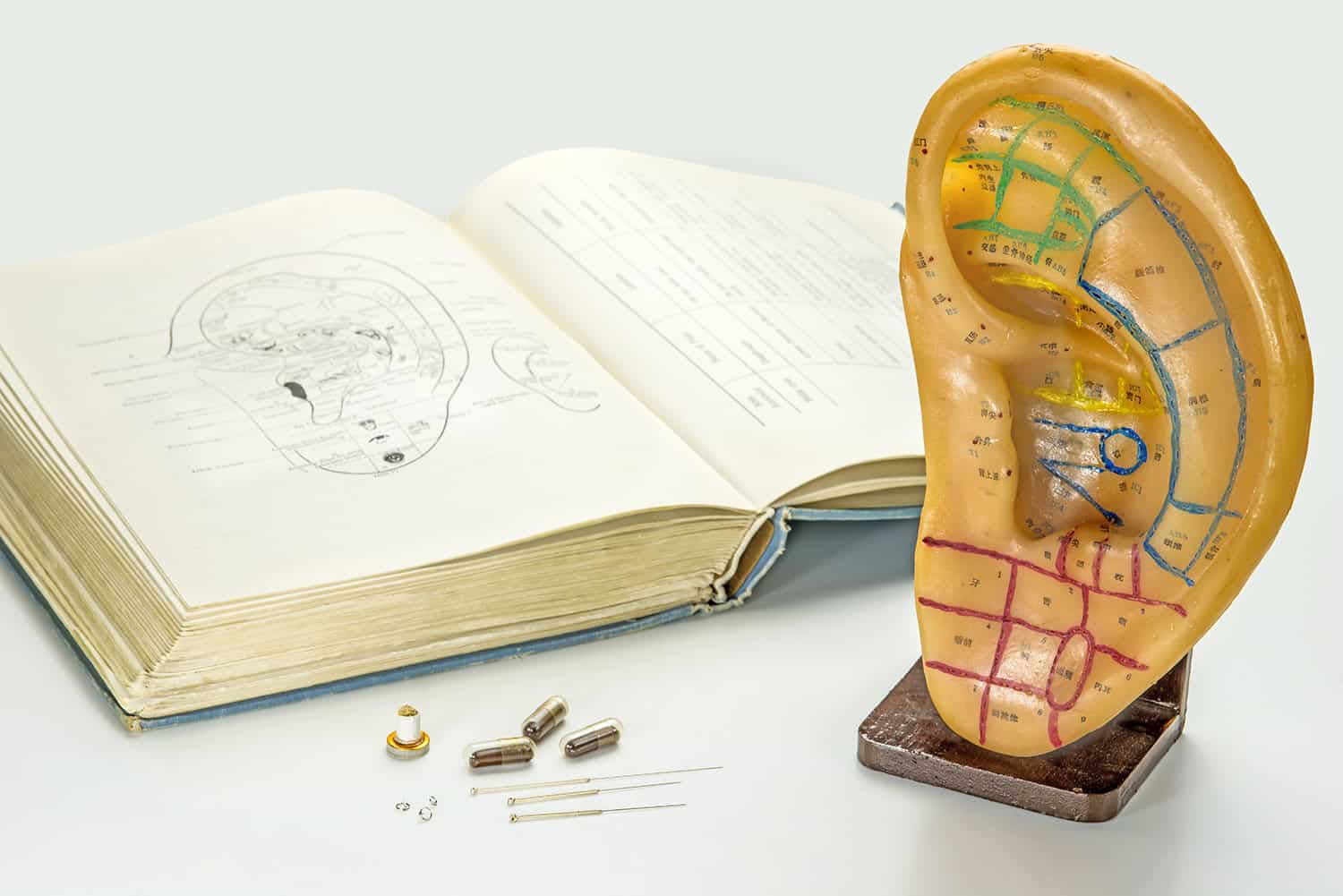
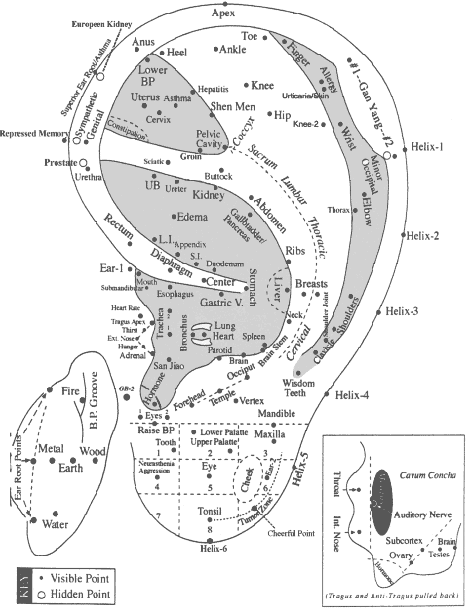
What is Auricular Acupuncture? Imagine the ear a keyboard to the body; auricular acupuncture is the stimulation of the acu-points on the external ear to create an effect on the body.  The acupuncture physician can stimulate the acu-points manually, with a laser light, with taped on ear seeds, with small acupuncture needles and with a specialized 3 pronged needle that can stay in the ear for hours or days.  The 3 pronged semi-permanent needle (SPN), can be stimulated with a small magnet frequently to strengthen the effect. The United States military utilizes the the 3 pronged semi-permanent needles in their Battlefield Acupuncture style.  Battlefield Acupuncture can be effective for immediate pain relief and also eases soldiers experiencing PTSD (post-traumatic stress disorder). Manually inspecting the ear can also be an effective diagnostic tool.  Auricular acupuncture can be a stand alone treatment and is often used along with whole body acupuncture points during an acupuncture treatment session.

Auricular Acupuncture was first mentioned around 500 B.C. in the Yellow Emperor’s Classic of Internal Medicine, a historical classic text documenting Chinese medicine. French physician, Dr. Paul Nogier made significant discoveries in the 1950’s to form the modern auricular acupuncture understandings and methods. Dr. Nogier noticed that several of his patients had a scar on the upper ear. When inquiring about the scar, he discovered that a local practitioner was treating the village people for low back and hip pain by cauterizing this area on the external ear. Dr. Nogier conducted similar tests on other patients and found their low back pain was also relieved. He found that acupuncture needles and other forms of stimulation to be as effective as cauterization. Dr. Nogier theorized that if an area of the upper external ear is effective on treating low back pain, then perhaps other areas of the ear could treat other parts of the body. His hypothesis led to the model used today in Traditional Chinese Medicine schools and clinics. 

For patients who are skittish about having acupuncture needles placed all over the body, auricular acupuncture is a great way alternative.  Ask your acupuncturist about Auricular Acupuncture to experience it for yourself.  

Posted in | Comments Off on Auricular Acupuncture: What it is and why is everyone talking about it?

7 Ways Acupuncture Can Help With Running Injuries

Running is an activity that supports mental and physical health. As with any physical activity, injuries can happen. When it comes to runners, things like sprains, strains, aches and pains are all too common, especially in the ankles, knees and legs. For minor running induced pain, rest, topical application of ointments and hands on therapy is suffice to relieve the pain. However plantar fasciitis, runner’s knee and sciatica are chronic conditions that can take more than rest and minimal care to correct. This is where acupuncture comes in. Acupuncture involves inserting hair-thin needles into the skin at specific points, which when stimulated, promote the body’s natural ability to heal itself.


Here is a list of Seven Ways that Acupuncture Helps Heal Running Injuries


  1. Reduces Inflammation Inflammation is common to running injuries. Inflammation is typically caused by trauma or repetitive motion to the area. Inflammation occurs when cortisol levels are elevated and studies show that acupuncture can decrease cortisol levels very effectively, thus decreasing inflammation.
  2. Decreases Swelling Swelling is another common symptom of running injuries. It occurs when increased movement of fluid and white blood cells rush to the area that is inflamed. The swelling can remain for several days. But specific acupuncture points can actually help decrease the swelling, restoring proper fluid circulation to the injured area, also decreasing the time it takes to heal.
  3. Promotes Circulation When the injured area is swollen and inflamed, proper circulation of blood and other bodily fluids will be limited. Specific acupoints have been shown to increase circulation throughout the body and by placing needles around the affected area, it signals the body to send healing to that targeted area.
  4. Corrects Muscle Imbalances When muscles become imbalanced, they can cause a chain reaction that results in muscle, tendon and joint pain. By utilizing motor points in the affected muscles, a release is elicited and the muscle can return to its correct position, which decreases stress on the injured area.
  5. Improves Sleep For runners, with or without injuries, sleep is vital. In order to be strong as a runner, the body needs time to heal in between each run. The CDC reports that nearly 10 percent of all Americans suffer from chronic insomnia and this includes runners. Regular acupuncture care helps the runner get the quality sleep they need.
  6. Relieves Pain Runners tend to be very health conscious and are happy to find acupuncture a very effective and drug-free way to relieve pain. The World Health Organization has a multiple of studies that endorse acupuncture for all types of pain relief.
  7. Relieves Stress Mental and emotional stress relief is inherent in the participation of running and in any a physically demanding exercise.  Acupuncture offers a similar feeling of stress relief without the run as acupuncture has been proven to support endorphin release resulting in the natural calming “acupuncture high” similar to the “runners high”.

If you’re one of the many weekend warriors and backyard athletes that use running as your release, then having a licensed acupuncturist on speed dial, might be a great way for you to stay healthy. Give it a try. You might be pleasantly surprised how amazing you feel in as little as one to two treatments. And while most runners seek out acupuncture as a way to treat an ache, pain or injury, many find that regular acupuncture treatments can actually improve their running by restoring balance and energy throughout the body.

Posted in | Comments Off on 7 Ways Acupuncture Can Help With Running Injuries

Acupuncture and Fatigue

Fatigue is defined as extreme tiredness, usually resulting from physical or mental exertion or illness. For most people, their bodies are programmed to be tired at night and alert during the day. However, work, family and other responsibilities frequently require that we ignore these innate programs and interrupt our natural sleep patterns. Statistics show that nearly 43 percent of all people in the workforce report being fatigued on a daily basis. This can ultimately lead to illness, accidents and even death. Fatigue is no joke and needs to be addressed.

Conventional medicine treats chronic fatigue with prescription medications, and while this may work for some, for many others it becomes an addiction. Traditional Chinese Medicine (TCM) offers a better alternative. TCM is a medical system that has been around for nearly 3,000 years. It utilizes multiple modalities to treat fatigue, including acupuncture, moxibustion, herbal formulas and nutrition. To determine the right treatment, a diagnosis must be made first.

TCM diagnosing is quite different from conventional medicine. Eastern Medicine considers the whole person when diagnosing and treating. TCM looks at the patient holistically, considering all aspects, including the mind, the body and the environment of the person. Diagnosis of a person includes inspection and observance of the expressions, colors, appearance, smells and any idiosyncrasies that may be present.

TCM also looks at the patient’s tongue and pulses on both wrists. These two practices are the primary diagnostic tools used in TCM. The tongue and pulses can reveal quite a bit of information about what is going on internally. Different areas of the tongue correspond to body systems and energetic pathways. For example, the tip of the tongue can show irregularities related to the heart and the mind. The rear of the tongue can show irregularities related to the urinary bladder and kidneys and is associated with the emotion of fear. The pulse is also broken down into six locations, three on each side, all of which correspond to a body system and the related energetic pathway.

With fatigue and TCM, there are multiple possible diagnoses, including energy deficiency, blood deficiency, phlegm / dampness accumulation, liver energy stagnation, etc. Each one of these patterns has their own unique symptoms, but they all have one thing in common: feelings of fatigue. While there is not enough time to discuss all of the aforementioned patterns, some of the symptoms can include poor digestion, dizziness, shortness of breath, vision issues, mood swings, irritability, depression, chronic coughing, sinus conditions, poor concentration and mental fogginess.

The modalities mentioned before, such as acupuncture, can help bring balance back into the body, thus correcting the symptoms and alleviating fatigue, over time. Moxibustion can warm the energetic pathways and help remove excessive phlegm accumulation in the body. Herbal formulas can treat any host of symptoms, as can proper nutrition, all of which will most likely be used by the seasoned TCM professional.

If you or somebody you know is suffering from fatigue, contact a licensed acupuncturist in your area. They can walk you through the diagnosis and treatment process and help you get back on the road to recovery.


Posted in | Comments Off on Acupuncture and Fatigue
(941) 926-7899 Directions Contact/Schedule